How can I organize my food storage containers?
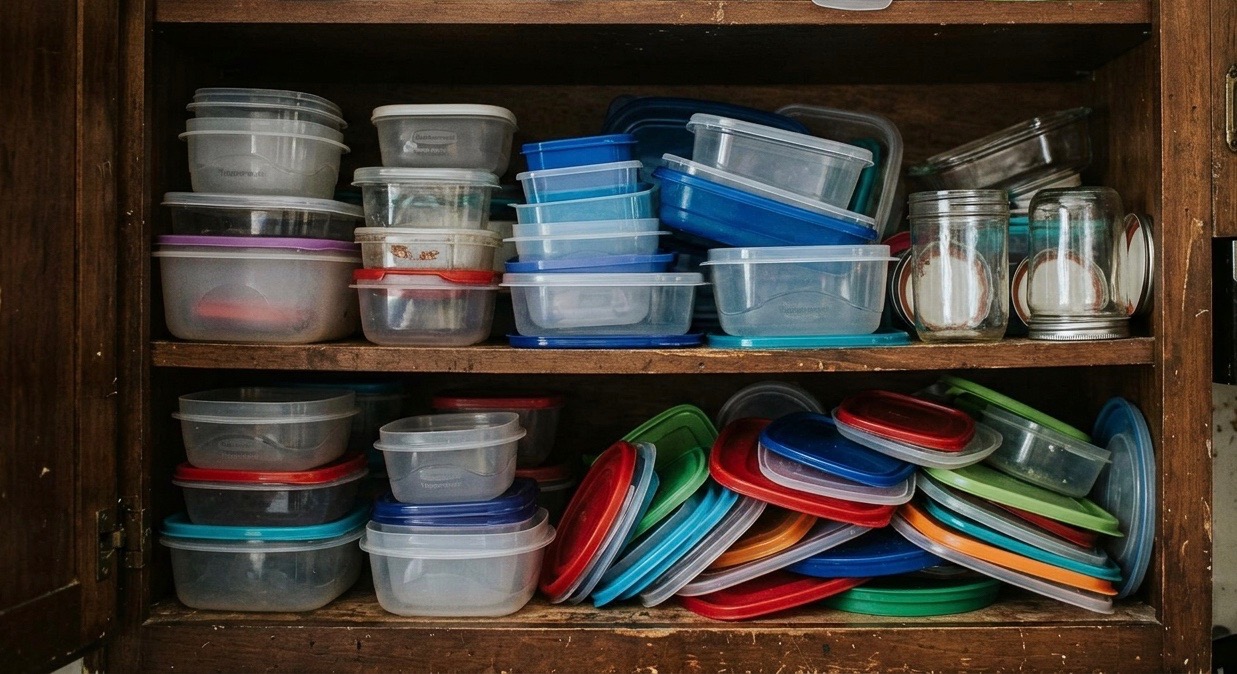
Food storage containers. They are the bane of many people’s kitchen organization. How do you store them? How many do you keep? Why, oh why, are there never the same number of lids as containers, and why don’t they ever match? Why can we never find the one we need? Why do they all fall out of the cupboard every time we try to remove even one? According to market research done by Businesswire, the food storage container industry in the U.S. is worth over 36 billion dollars with home use being the biggest percentage of that usage. We all have food storage containers. What are we going to do with them?
Food storage wars
I have solutions, but it’s going to be controversial, and you’re just going to have to trust me. There are two camps when it comes to food storage. Camp #1: Store bottoms nested together and lids together. Camp #2: Store your containers with their lids on. I fall firmly in Camp #2, and that is a battle I will fight. Don’t click away yet. I will explain why, and hopefully by the end of this article you will agree with me (or at least be willing to give it a try to see if it works as well as I say).
The Problem
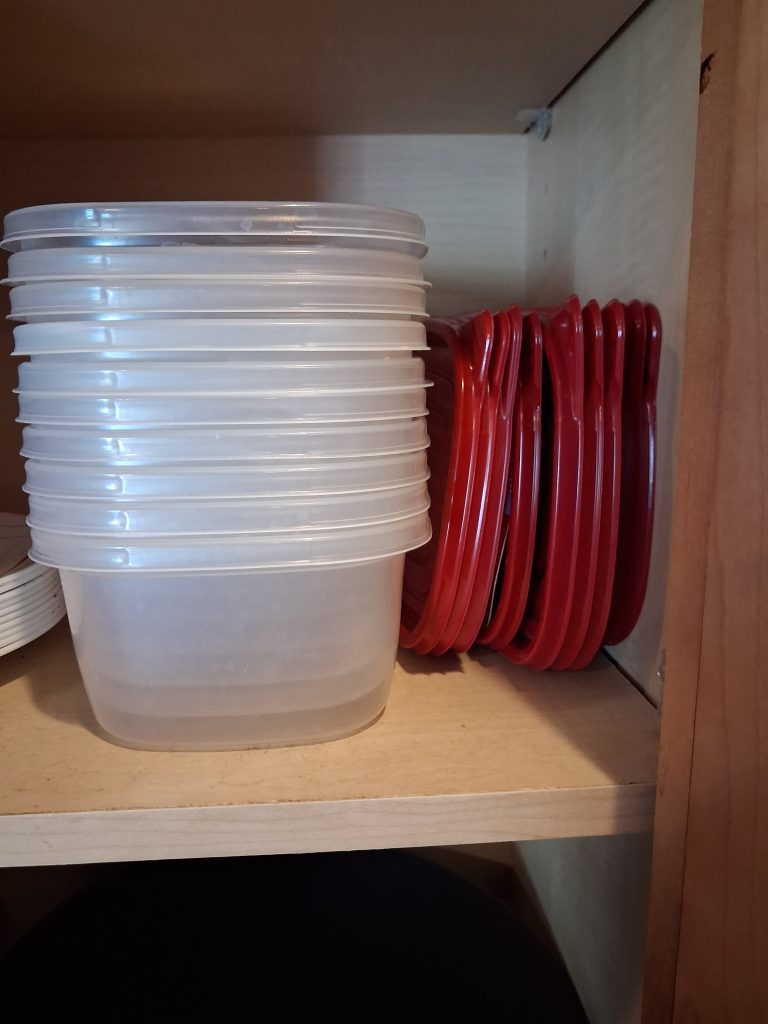
Most people who struggle with storing their food storage containers (and storage solutions as clutter is another issue we should discuss), try to use Method 1. This leads to all the questions that we ask: where, how many, how to, how come?!!! Storing containers and lids separately and nesting them does allow you to store more containers in less space. This is absolutely true. And this system can work. It works best when all your containers are identical.
But what happens when, like most homes, you have all sorts of different sizes and shapes and styles of storage containers? You have to have a very specific organizing personality to want to nest and unnest containers every time you get them out. You have to like micro-sorting in order to put things away so you can find them again. When things are nested, you don’t know what’s there unless you have a system. You have to sort things by shape, then style. Then you have to do the puzzle thing to figure out how to nest all the different pieces. Not to mention figuring out how to store lids without them falling down around your ears every time you look for one. Finally, you have to regularly take a block of time to get everything out to match it all up to discover which sets are missing pieces.
I’m sorry, but most of us don’t have the time or patience for any of those things, even those of us who would enjoy them. Storing containers with lids already on solves so many of those problems.
Solutions
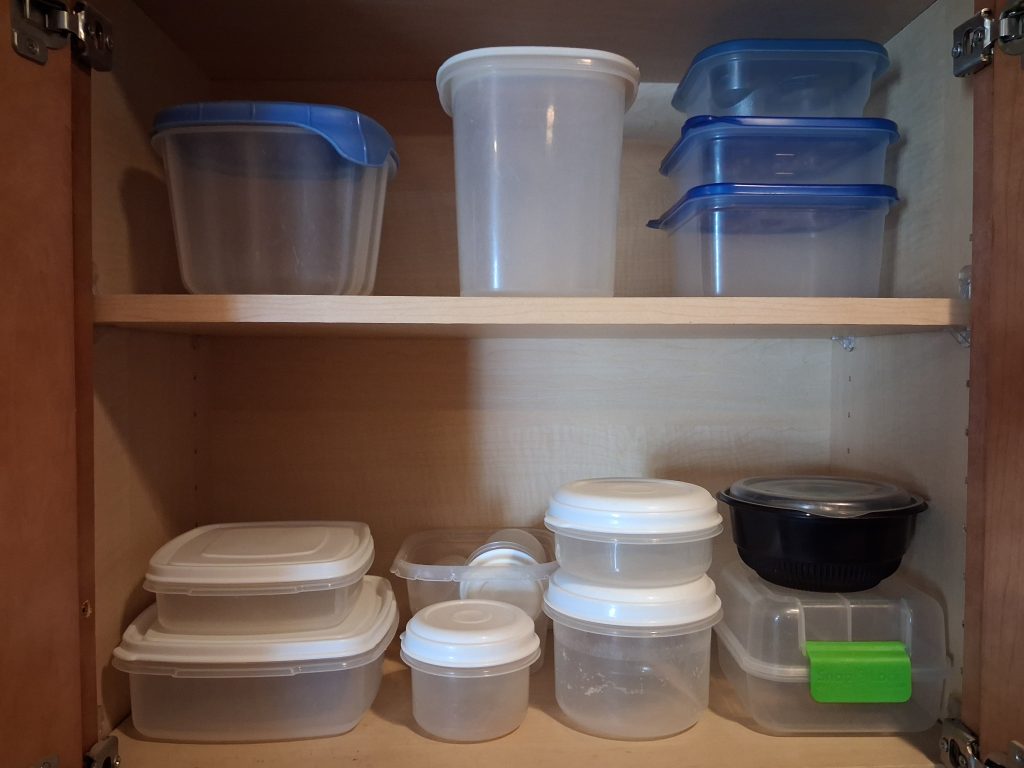
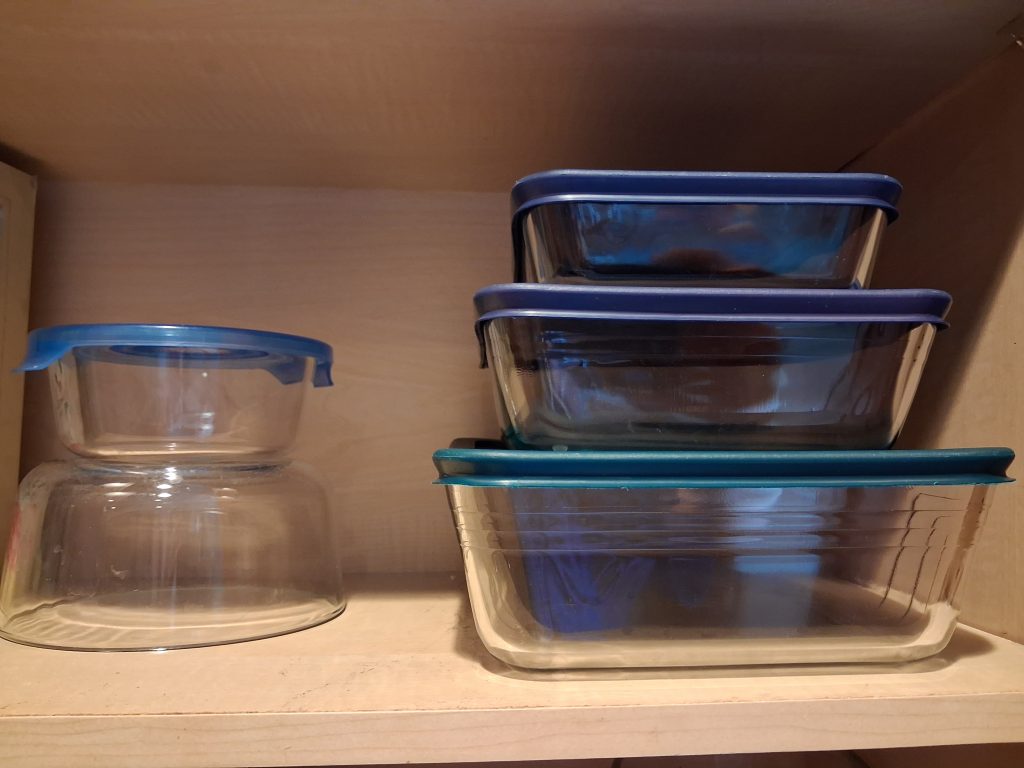
How does storing your containers with the lids on answer all those questions? First, you will never have to go searching for the lid that you need. It is already on the container. This will save you time, especially when you are frazzled. Second, you will not have to wonder where the container that you need went. All your containers will be visible because you didn’t nest them. They can’t nest using this system. In addition, you don’t have to have a micro-organizing personality, you just have to have one food storage container zone in your kitchen. You don’t need a system, you just need a space. You will also never have to do a “matching day” to declutter your container shelf. You will see immediately if a bowl or lid is missing. Finally, storing your containers with the lid on creates its own uncluttered visual aesthetic.
Objections (I know you have them!)
Now I know what you are thinking. “Surely I can’t actually survive with the number of containers that will fit in my cupboard if they are stacked with lids on.” But I will challenge you on this idea. There is a good chance that you have many more containers than you will ever need for your daily life. And yes, I said daily life. I do not recommend hijacking your entire kitchen for the few days a year you might have enough leftovers to feed an army. Those leftovers can be stored in the fridge in their serving containers, or stored in a disposable Ziploc bag just this once. I thoroughly endorse reusable versus disposable, but the peace of mind you will gain in having a functional kitchen 363 days a year is worth the trade-off to me.
In addition, you will probably still come out ahead on sustainability issues over the course of the year by all the food waste you will prevent with this system. When you have less food containers, you are more aware of what you store in those containers. When you run out of food storage, you naturally look in the fridge to see what used that storage, leading you to eat up those leftovers before they spoil. Having less containers can actually lead to better organization, both in your cupboards and in your refrigerator.
The Challenge
When I first heard this concept, I too, was skeptical. So I challenge you to just try it. You’ve been needing to declutter your kitchen anyway, right? So use this as an opportunity to test the method and gather some data.
First, pick one cabinet in your kitchen to serve as your storage container zone. This serves as a natural limit on how many containers you can save. Then match all your containers to their lids. This might take a while, but with the new system, you will never have to do it again! Once you have sorted everything, get rid of the left-overs. They don’t serve their food storage purpose anymore. (Before you recycle them, consider whether they might be useful as organizing solutions in other parts of your house.) Next, choose the containers that you actually use the most. Not the most expensive ones. Not the ones you think you should use. Not the ones in the really cute set with a million sizes but adorable matching lids. Store all the most-used ones in your cupboard first. Keep going from most-used to least-used until your space is full.
Once you fill the space, donate the rest of the containers. You won’t need them. And if you don’t believe me, put them in a cardboard box you have lying around, label it “food storage containers” with the date, and put it in your basement or attic. Time will tell. If you really do need those containers, you still have them. If after 6 months you still haven’t opened that box, don’t open it, just take it straight to your local donation center.
Be flexible in training your space
Now, I know that I said I am a big “lids on” proponent. I am. But you are training your space to work for you. Systems always need to be flexible to actually work. So, I store 90% of my containers with lids on. But I have one end of one shelf that has 10 identical rectangular, clear containers nested with their lids stacked vertically next to them. These are my go-to for normal leftovers, and this system allows me to keep more while still never having to hunt for lids. But I also own containers we use to pack lunches, the tiny ones for dressing, the round ones for pasta, the bento box for snacks, the snap-tite ones for baking staples, and the other odds and ends of the food storage world. These are all stored with their lids on.
When I organize this way, my space works for me. Make yours work for you, too, (with the lids on!). Contact me today if you need some one-on-one instruction in your space!