How do I motivate myself to declutter?
What should I declutter first?
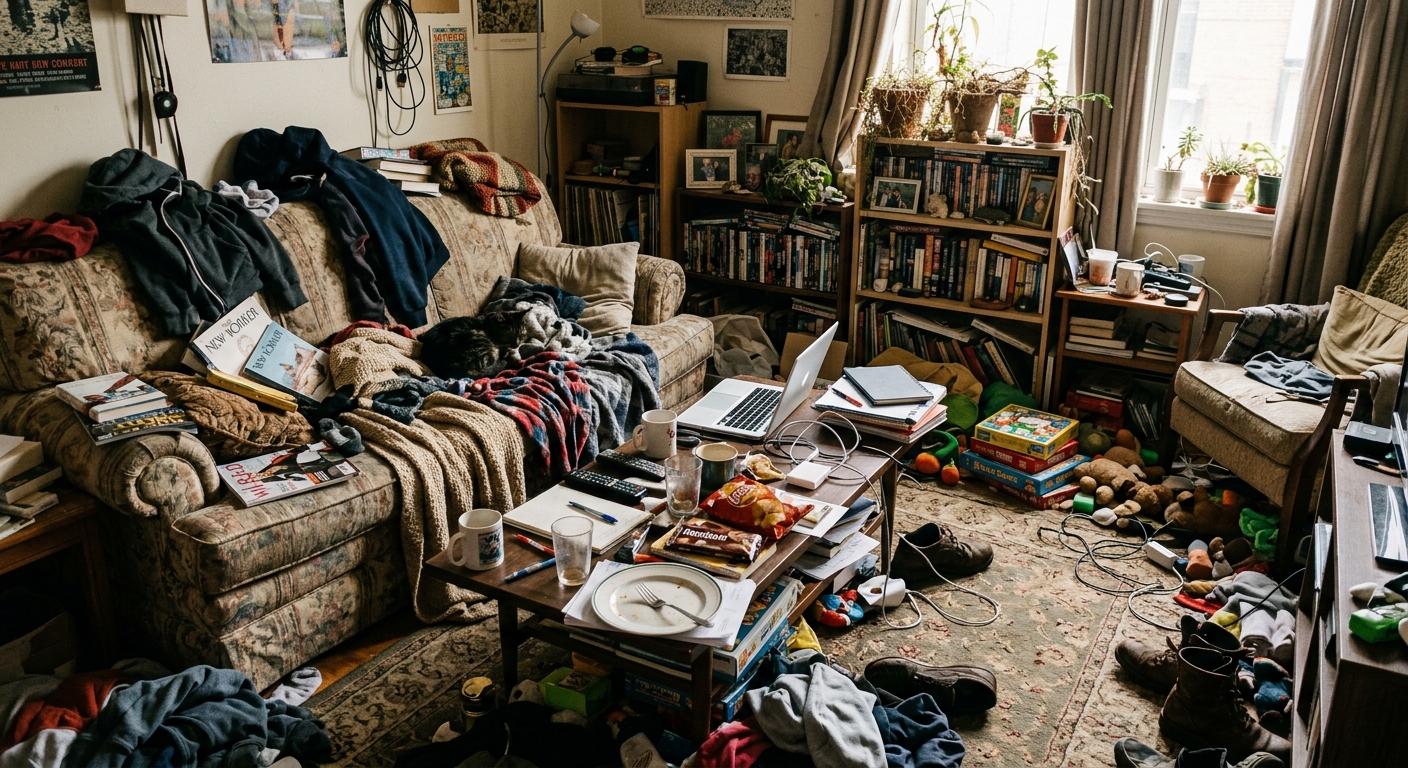
School’s back in session, fall sports have started up, the holidays are looming, and things are just quietly slipping out of control. This isn’t a hoarding emergency or a ridiculous mess. You are just slowly losing the battle to chaos one item at a time. And now that you have realized it, you have no idea how to even begin getting your life back under control. You are absolutely not alone. Life is busy. Things are so easy to come by. Time is not. So how do you get your head back above water?
Dana K White’s 5-Step No Mess Decluttering Process
I know, I know. It sounds like a bad late-night infomercial. See results or your money back! Guaranteed! But, there is something to it. I am always trying to learn more to help my clients better. When I started using Dana’s process for myself to see if it really worked, I just knew that my clients needed this process, too. So I got officially trained in her system because it really works. So how does it work? It really is just 5 steps, and no mess in the process. Because who has a full weekend to completely trash their house in order to get things back on track? If we all had that kind of time, we probably wouldn’t be in this mess in the first place.
Step 1: Look for obvious trash
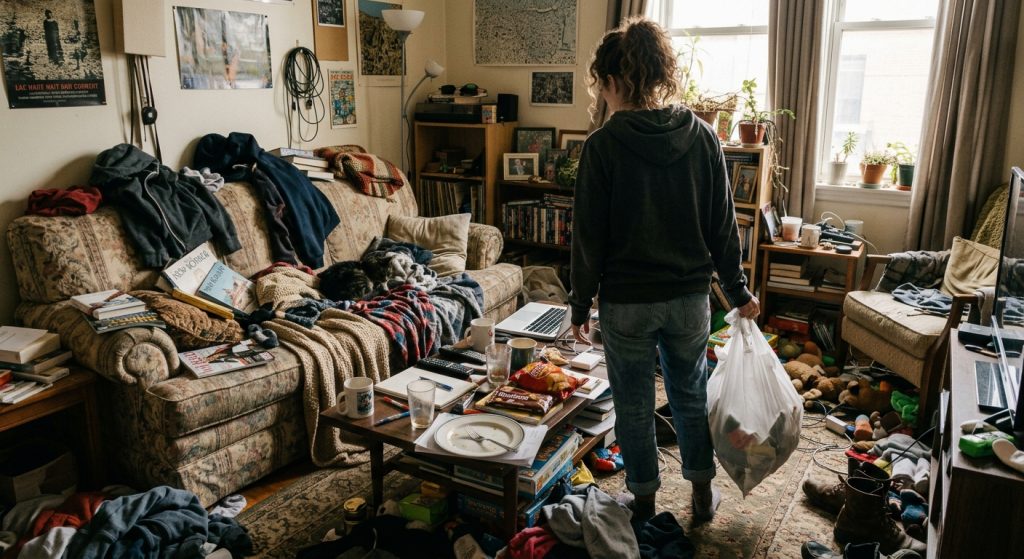
Every room has it. I am not accusing you of being a slob. Somehow the garbage just materializes. A wrapper here. A scrap of paper there. A broken something under that. Grab a white trash bag and move around your space throwing out the obvious garbage. These are not the hard decisions, these are easy wins. That doesn’t belong here, it belongs in the bin. And now you have one less piece of clutter.
Step 2: The easy stuff
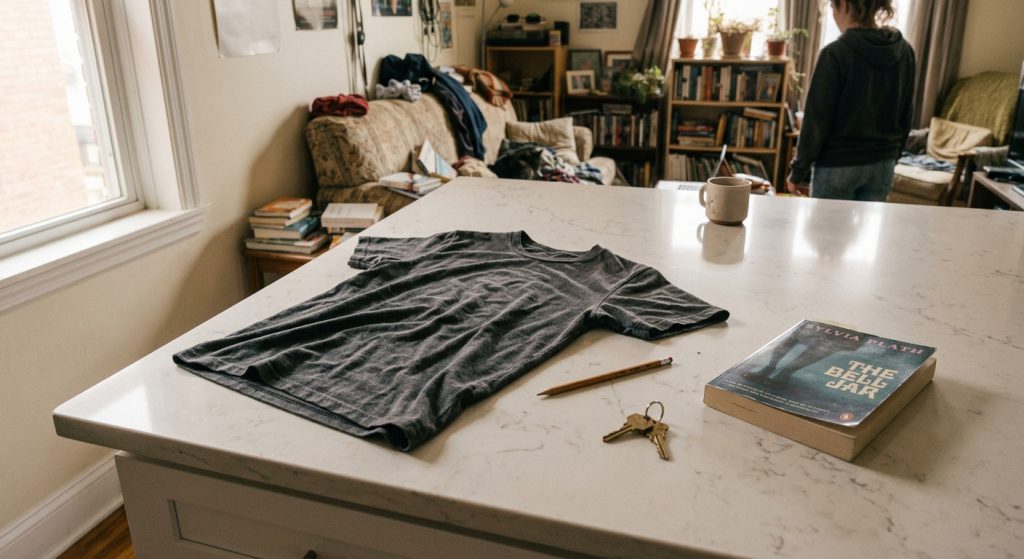
These are items that belong in your house, they just don’t belong here. They already have a “home” and you just need to walk it there. Again, not the hard decision, more easy wins. The pencil that has a home in the mug on your desk, but somehow it ended up on your night stand. The t-shirt that fell out of the laundry basket on the way to the bedroom and has been lying on the sofa for the last 2 days. Find those things and take them there now.
Don’t make new piles, but do glance around to see if there are other things that belong in the same space. What time you “waste” in walking back and forth 15 times you will make up in progress you can actually see. Plus you can be interrupted at any time and not have new piles of clutter stacked everywhere because you were trying to be efficient. And even if you are limited in energy for medical reasons, this process still works, just a little slower with more breaks.
Step 3: Look for “duh” donations
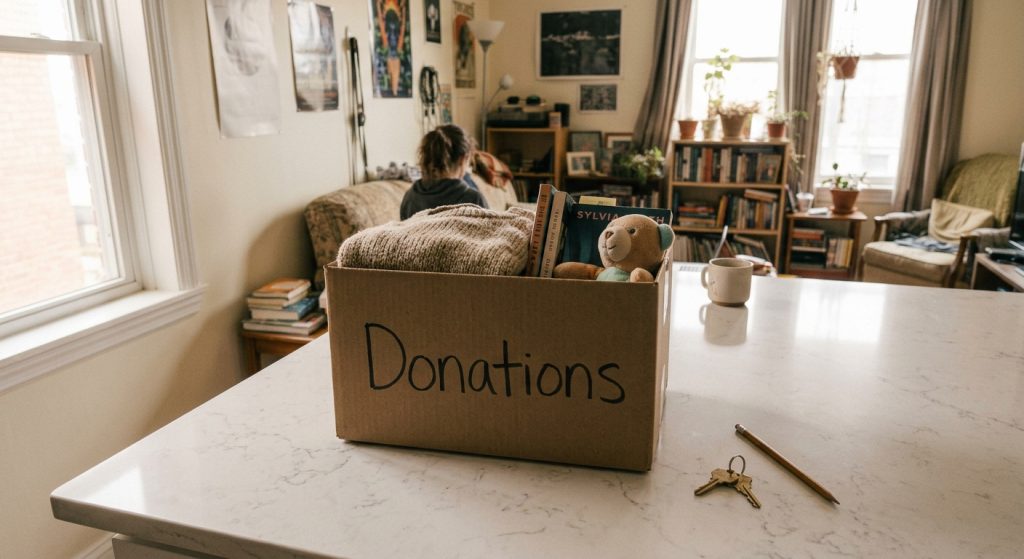
These are the things that aren’t garbage, but you know you don’t need or want them any more. These also shouldn’t be hard decisions. It’s the perfectly good shirt that you hated the minute you put it on at home and you know you will never wear again. It’s the 5th (4th, 3rd…) spatula in your drawer that you don’t really need and you choose your favorite every time anyway. These go in a donatable donation box like cardboard you were going to recycle anyway or a bin you decided to donate. That way the whole thing can go in your car after today to deliver to your favorite charity.
We are through the first three steps already and you shouldn’t have had to make any difficult decisions. And in most people’s spaces, this will have made a significant dent in the mess.
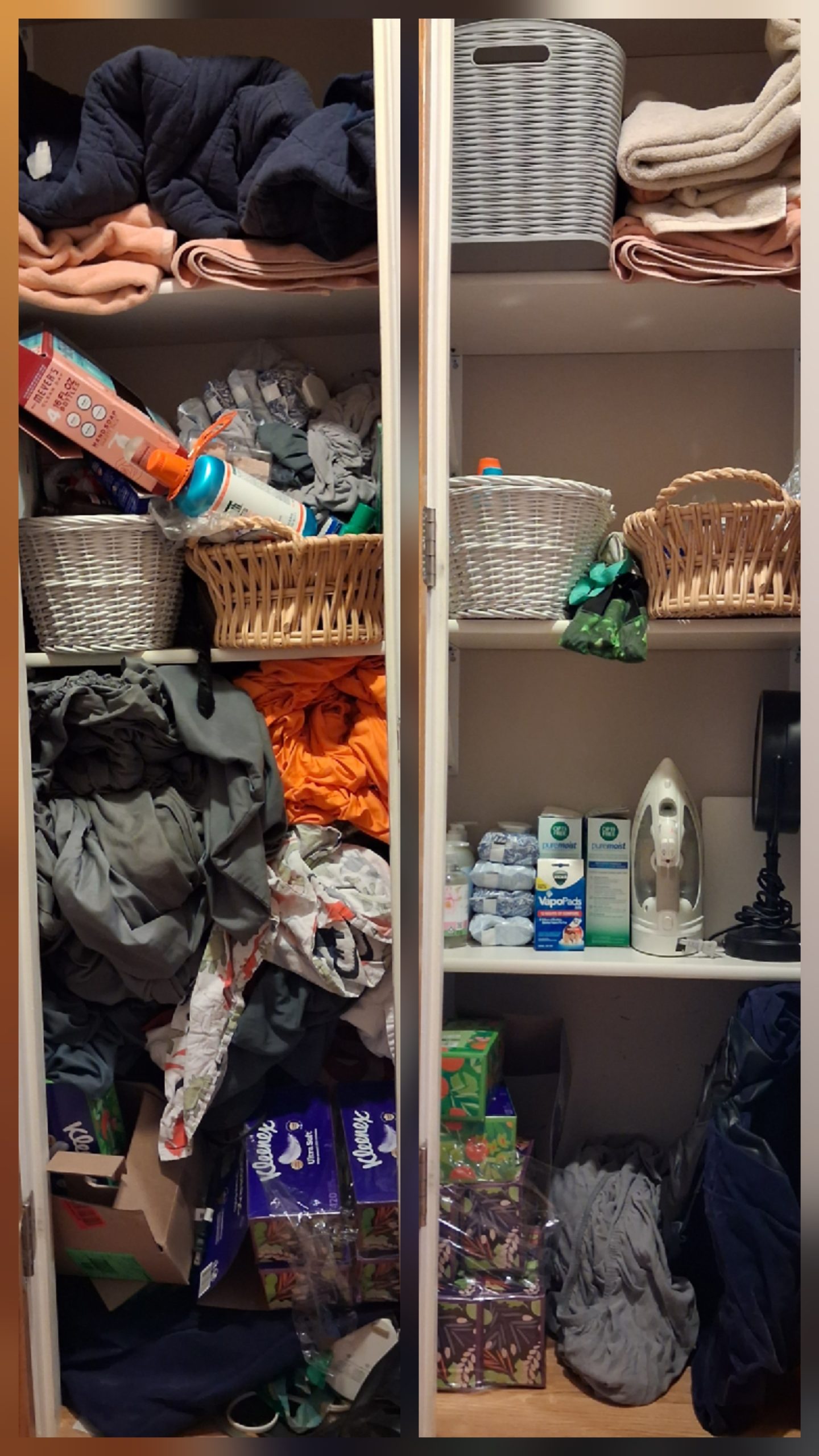
Pro tip: Take a before picture of your space. Our brains quickly forget and adjust to the new normal. Having before and after photos to compare will be very encouraging and motivating.
Step 4: Ask the two decluttering questions
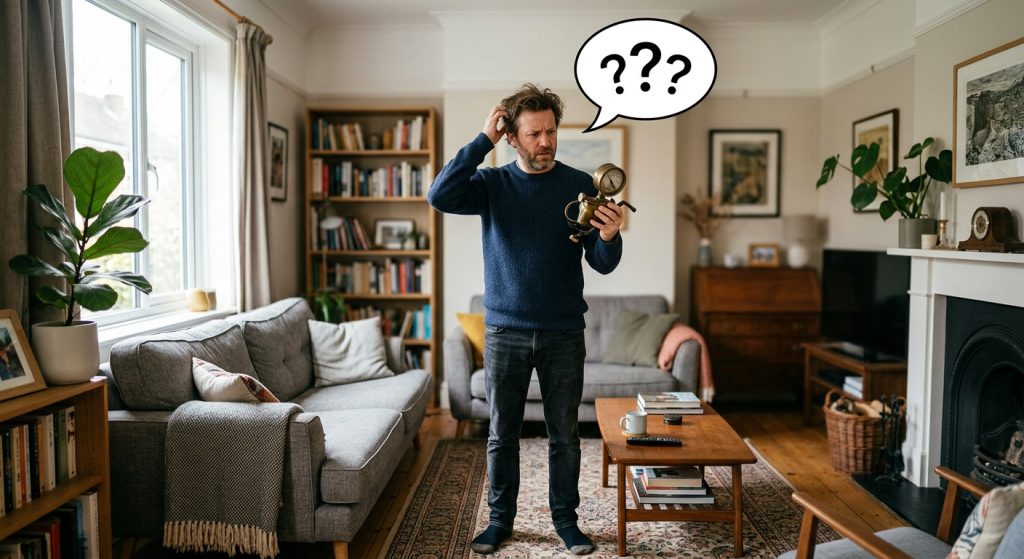
Most people freeze here. These are the things that you didn’t know what to do with in the first place and why things pile up. This is where people get defensive because they don’t want someone telling them to get rid of all their stuff. Well, there’s good news. You don’t have to get rid of anything you don’t want to, as long as it fits in your space. (See Step 5.) And the two decluttering questions help take most of the “hard” out of the decision.
1) If I needed this item, where would I look for it first? Take the item and put it there. Easy as that. This is the secret sauce. When we have too much clutter, we lose things because they don’t have homes. This creates a home for the item. But it creates a home for the item where we know to look for it!
It’s kind of like that hack that they tell you at the bank when you are making up a new PIN. Pick the first 4 completely random numbers that come to mind. No one else will be able to guess those numbers because they were random, but for some reason to your mind they made sense. I don’t know why this works, but it really does! The same is true for this process. If your brain on instinct says, “I would look for a flashlight in the kitchen cabinet above the sink,” don’t argue. Just put the flashlight there. This is about making your space work for you, and this works.
2) If I needed this item, would it even occur to me that I already own it? If you get stuck on an item, then maybe you don’t need the item. If it would not even occur to you that you owned one, then there’s every chance that you would just automatically go out and buy one new if you needed one. Which means the one you have now you will never use, it will just take up space. Go ahead and donate it so that someone else can use it.
Step 5: Make it Fit
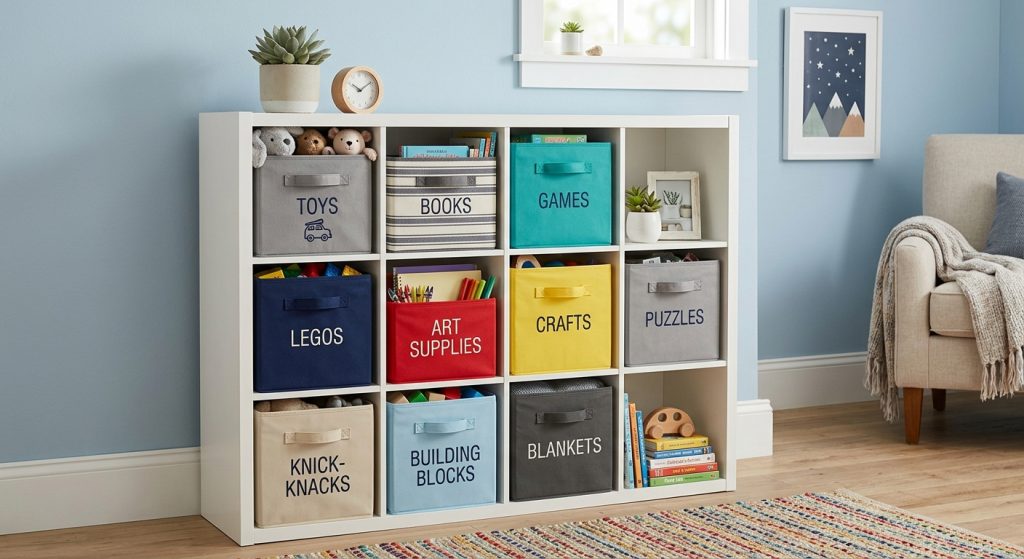
Remember when we said we would come back to this? You can keep anything you want in your house. You just can’t keep everything you want in your house (for most of us). Your things need to fit in your space. Your house is a container that will only hold so much, no matter how hard you try. When you ask, “Where would I look for this first,” and then take the thing there, you have to make it fit. And this doesn’t mean cramming it into an already overstuffed cabinet that is bursting at the seams. This means putting it in a space that holds it well, so that it is findable and usable.
If the space where something belongs is full, start at step 1 again. Is there garbage you can throw out to make room? Can you find an obviously donatable item that you can remove? Is there something that doesn’t belong there you can take to its home to make room for the new item? Containers are limits and we can only keep as much stuff as the container reasonably holds. If there is no garbage, donations, or misplaced items, you just have to decide what one thing you like less than the thing you want to keep there.
Pro tip: Don’t sidetrack when you take things to their “where would I look first” homes. There will be more potential projects there. Ignore them. Make room for the item that was the reason you came, and then go back to your original project. Otherwise you will spend all your time stuff-shifting and not making actual progress in any one space. When you finish your first space, you can pick a new space to complete.
No mess decluttering
The beauty of this process is that you can start and stop at any time. You can declutter for 5 minutes or 5 hours. Either way you will always be removing things from this space to put them where they truly belong. You will never be making bigger messes before you get to the progress. When you are done, you will have less stuff, and you will be able to find the stuff that you kept. 5 easy steps mean you don’t get stuck because there is a question to ask to keep you going every time.
Pro tip: No Mess decluttering is about progress, not perfection. And decluttering is not the same as organizing. This will help you reduce inventory and find homes for things. Making those homes organized and aesthetic is a different process.
This is not the only way to declutter by any means. But if you have limited time, limited energy, limited attention, or limited mobility, this system might work for you where other systems haven’t. So if you are stuck and want to declutter but don’t know how, give this a try. And if you need someone to guide you through the steps at first until you have figured out how they work in real life or help you organizes those spaces once you are done decluttering, contact me now. Happy decluttering!